Finding the best BBL surgery clinics in Seoul comes down to one question: does the surgeon use a fat-grafting protocol that keeps you off the small list of preventable complications? Everything else — reception photos, before-and-afters, glossy waiting rooms — is secondary.
- The best bbl surgery clinics in Seoul use subcutaneous-only fat grafting, a protocol linked to far fewer serious complications than older techniques.
- KHIDI registration and board certification are non-negotiable filters, not nice-to-haves, when picking a BBL clinic in Seoul.
- Seoul Cosmetic Surgery matches patients with 30+ vetted partner clinics rather than publishing a static top-10 ranking.
- Combo trips pairing BBL with rhinoplasty or facial feminization surgery need a coordinator managing recovery time between procedures.
- Skip any clinic that will not name who personally performs the fat injection — that is the biggest red flag in body contouring.
Why this matters
BBL (Brazilian Butt Lift) carries a documented complication profile that's different from rhinoplasty or blepharoplasty — the risk isn't scarring, it's fat entering the wrong tissue plane. Multi-society safety task force research on gluteal fat grafting found mortality risk dropped from roughly 1 in 3,000 procedures under older intramuscular injection techniques to under 1 in 15,000 once subcutaneous-only protocols became the global standard.
That single technical detail — subcutaneous versus intramuscular injection — matters more than surgeon reviews, clinic size, or how many BBLs a website claims to have performed. In 2026, any clinic worth considering in Seoul should be able to state its protocol in one sentence, not a marketing paragraph.
Seoul Cosmetic Surgery is a KHIDI-registered medical tourism agency, not a clinic — it doesn't perform procedures. It matches international patients with board-certified surgeons across Seoul Cosmetic Surgery's network of 30+ partner clinics, which is why this guide ranks the criteria that separate safe BBL providers from risky ones instead of publishing a fixed top-10 that goes stale within a year.
How clinics get vetted
Rather than ranking clinics by name — names and staff change, safety standards shouldn't — this list ranks the six factors that actually predict a safe, well-executed BBL in Seoul. Each factor below is weighted by how directly it affects patient safety and result quality, based on aggregated plastic surgery safety literature and the vetting criteria used to onboard partner clinics.
1. Subcutaneous-only fat grafting protocol
The safety non-negotiable. Ask directly whether fat is injected only into the subcutaneous layer, never intramuscularly. This single protocol change is the reason BBL mortality data improved industry-wide after 2018.
Verdict: must-have. A clinic that hedges on this question, or describes technique vaguely as "advanced fat transfer," should be crossed off the list immediately.
2. Real-time ultrasound guidance during injection
Some surgeons use intraoperative ultrasound to confirm the cannula stays above the gluteal muscle fascia throughout the procedure, not just at the planning stage. It adds time to the operation but removes guesswork from the riskiest part of the surgery.
Verdict: strong plus. Not every reputable clinic offers it, but its presence signals a surgical team investing in the highest current safety standard rather than the cheapest one.
3. Board certification of the operating surgeon, named specifically
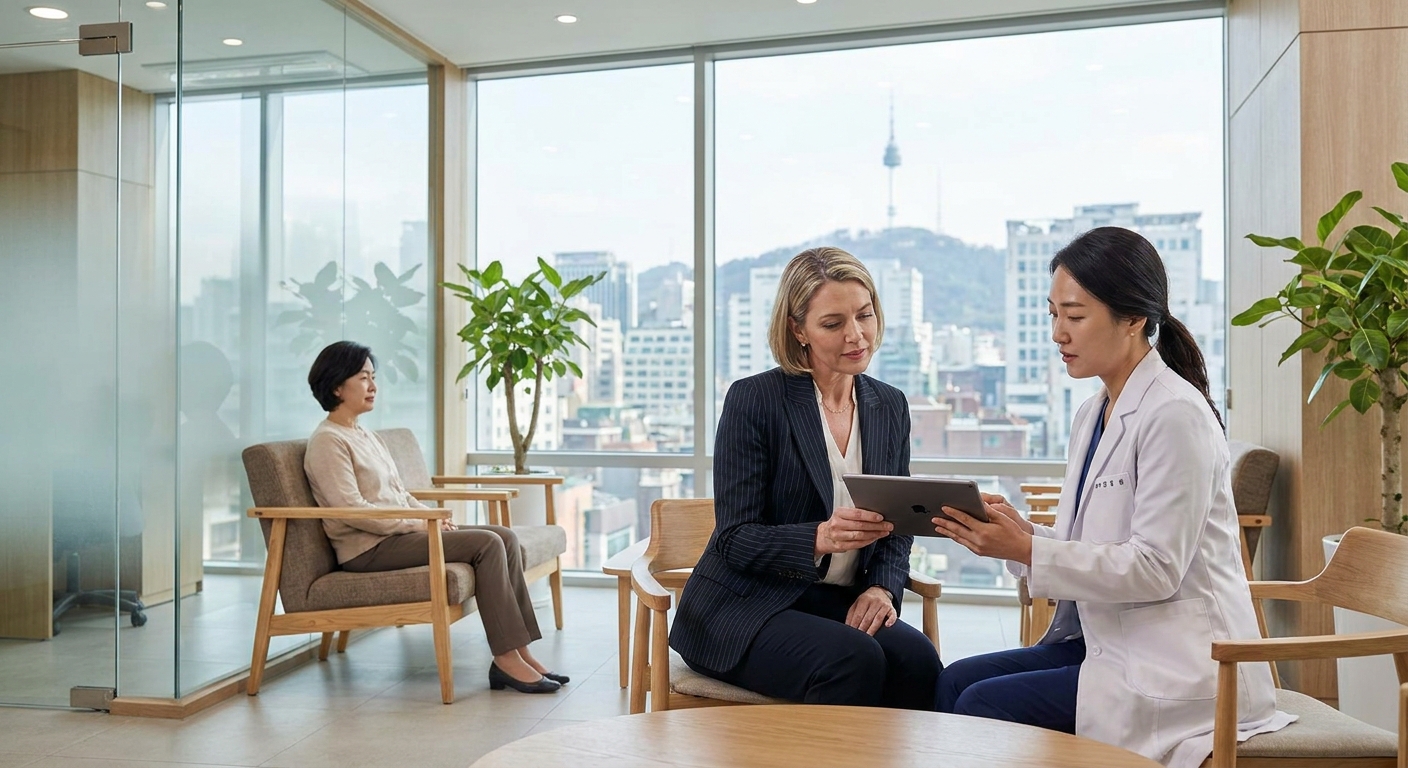
Ask who performs the procedure — not who runs the consultation. In some markets, junior staff or non-certified practitioners handle parts of body contouring cases while a senior surgeon is billed as lead. A vetted clinic names its board-certified plastic surgeon and confirms they perform the fat harvest and injection personally.
Verdict: must-have. If a clinic can't answer "who is doing my surgery" with a specific name and credential, that's a red flag regardless of how the rest of the consultation goes.
4. KHIDI registration and facility licensing
Korea's Health Industry Development Institute (KHIDI) registration is the government's baseline trust signal for clinics treating international patients. It doesn't guarantee surgical outcome, but its absence should end the conversation.
Verdict: must-have. Licensing confirms a clinic operates within Korea's regulated medical tourism framework rather than as an unregistered operator marketing to foreign patients online.
5. Aftercare and revision protocol for complications
Fat grafting has a resorption rate — some of the transferred fat doesn't survive, and results shift over the following months. A clinic worth booking explains what happens if you need a touch-up, and whether that's covered under the original arrangement or billed separately.
Verdict: nice-to-have, but ask before booking. Clinics that dodge this question in the consultation tend to dodge it after surgery too.
6. English-language care coordination for combo procedures
Many international patients pair a BBL with rhinoplasty, facial procedures, or revision rhinoplasty clinics in Seoul during the same trip to reduce travel costs. That only works safely with a coordinator scheduling adequate recovery time between procedures, since combining major surgeries without spacing raises complication risk.
Verdict: important for combo trips, skip if planning BBL alone. Solo BBL patients can weight this criterion lower.
Comparison at a glance
| Criterion | What a vetted clinic shows | Red flag |
|---|---|---|
| Fat grafting technique | States "subcutaneous-only" without prompting | Vague language like "proprietary method" |
| Ultrasound guidance | Offered or clearly explained as unavailable | Never mentioned, never asked about |
| Surgeon identity | Named, board-certified, performs the injection | "Our team" with no named lead surgeon |
| Government registration | KHIDI-registered, licensed facility | No registration disclosed |
| Aftercare | Clear revision and resorption policy | No answer on what happens post-surgery |
| Combo-trip coordination | English-speaking coordinator manages spacing | No recovery buffer between procedures |
Get matched with a vetted BBL clinic
Seoul Cosmetic Surgery connects you with board-certified surgeons across its Seoul network.
Where to source your clinic match
- Work through a KHIDI-registered agency, not an unverified broker. Registration status is checkable, and it's the fastest way to filter out operators with no accountability to Korean health authorities.
- Confirm the agency is paid by the clinic, not by you. A legitimate medical tourism matching model charges clinics a referral fee — if an agency charges patients a matching fee on top of surgery costs, ask why.
- Cross-check the surgeon's board certification independently before finalizing a booking, even after a clinic has been vetted by a facilitator. A second confirmation costs nothing and removes any doubt heading into 2026 travel.
Patients also considering facial procedures alongside body contouring should look at facial feminization surgery clinics in Seoul or alarplasty in Korea for nose refinement, since coordinators scheduling BBL recovery can often build multi-procedure itineraries around the same trip.
FAQ
What is the safest BBL technique used in Seoul clinics in 2026?
Subcutaneous-only fat grafting is the current safety standard, avoiding intramuscular injection where fat can enter the bloodstream. Clinics that can't confirm this protocol directly should be avoided regardless of other qualifications.
How much does BBL surgery cost in Seoul?
Pricing varies by clinic, surgeon experience, and the volume of fat transferred, so get a quote directly from a matched clinic rather than relying on advertised averages. A KHIDI-registered facilitator can request itemized quotes on your behalf.
Is BBL surgery in Korea safe for international patients?
BBL surgery in Korea can be safe when performed by board-certified surgeons using subcutaneous-only fat grafting at KHIDI-registered facilities. Risk rises sharply at unregistered clinics or with surgeons who won't disclose their injection technique.
Can I combine BBL with other procedures on one trip to Seoul?
Yes, many international patients pair BBL with facial procedures like rhinoplasty or facial feminization surgery, but recovery time between procedures needs proper spacing. A care coordinator experienced in combo-procedure scheduling reduces the risk of overlapping recovery.
What's the biggest red flag when choosing a BBL clinic in Seoul?
The biggest red flag is a clinic that won't name the specific board-certified surgeon performing the fat injection. Vague team-based language usually means a less experienced practitioner may be doing part of the procedure.
Do I pay a fee to a medical tourism agency for BBL matching?
Legitimate agencies are typically paid by partner clinics through referral arrangements, not by the patient. If an agency asks for a separate matching fee on top of surgery costs, confirm exactly what that fee covers before booking.
How long is recovery after BBL surgery before flying home?
Recovery timing depends on the clinic's aftercare protocol and how much fat was transferred, so get a specific recovery window from your matched surgeon. Combo-procedure patients typically need a longer buffer built into the itinerary.
One last thing
The detail most patients forget to ask about: whether ultrasound guidance happens in real time during the injection, not just during pre-surgery planning. Clinics market "advanced imaging" on their websites constantly — confirming it's used live in the operating room, not just for consultation photos, is the question that actually separates marketing from protocol in 2026.